

The Why Behind Wilderness Medicine
December 19, 2025
Columbia: Me Gusta
December 22, 2025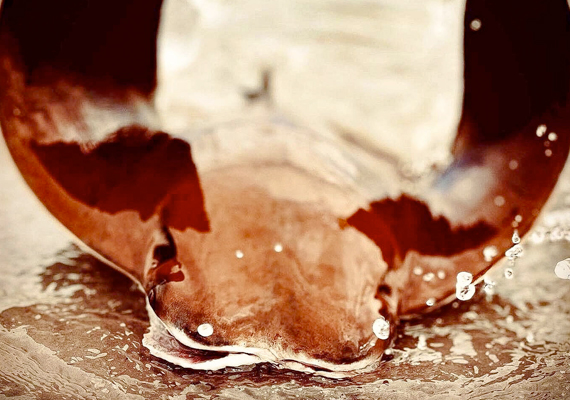
Tail Fly Fishing Magazine, by Captain Jason Moore –
They slip in on the rising summer tide, largely unseen and certainly unheralded. But for a (very) few knowing fly anglers, cownose rays bring the heat.
It took a few seasons to crack the code on these rays. Summers along this stretch of coast can feel still and slow. Flounder settle near the cuts, and bluefish might light up the surface occasionally, but the fly game stays subtle most days. Then the rays showed up. Clean water sweeps over sandbars with the tide. Big fish move with intent and are more than willing to eat a fly if it moves just right. It felt more like the tropics than southern New Jersey.
It made sense to go looking.
Wild Bill stood on the bow of the panga, relaxed, rod tip low, line stripped out and at the ready. The tide flooded the flat, rolling up the edges and across the sandbars. Ripples were starting to show, carrying everything the rays came for—small fish, sand crabs, and anything else caught in the tumbling current, or that moved too slowly without burrowing into the sand. From up top, dark shapes slid in and out of the flow, wings just breaking the surface as they fed, pivoting and leaving clouds of fine sand in their wake.
Cownose rays (Rhinoptera bonasus) are a seasonal fixture here, showing up each summer as the water warms along the shallow inlets and bays of the Atlantic seaboard. Averaging 20 pounds and sometimes pushing twice that, they cruise the flats, bays, and beachfront troughs looking for small fish and crustaceans, turning over sand and leaving behind the plumes that give them away.